Where Do Tattoos Hurt the Most? The Complete Pain Chart
How much does it hurt? This is the number one question. Before the first tattoo, before the fifth tattoo, before getting tattooed in a new spot. The answer is always the same: it depends where.
Tattoo pain isn't random. It follows clear logic - areas with thin skin, close to bone, or packed with nerve endings hurt more. Areas with thicker skin and muscle hurt less. We put together a complete pain chart so you can prepare for what's coming.
How tattoo pain works
A tattoo machine pushes a needle into your skin 50-3,000 times per minute. The needle penetrates through the epidermis into the dermis, where it deposits pigment. Pain depends on three things:
- Skin thickness - the thinner the skin, the closer the needle gets to nerves and bone
- Nerve endings - some areas are packed with them (palms, soles, groin)
- Bone proximity - needle vibration on bone is a specific kind of pain you can't ignore
The pain chart
Four pain levels from mild to extreme. Green means smooth sailing, red means gritting your teeth.
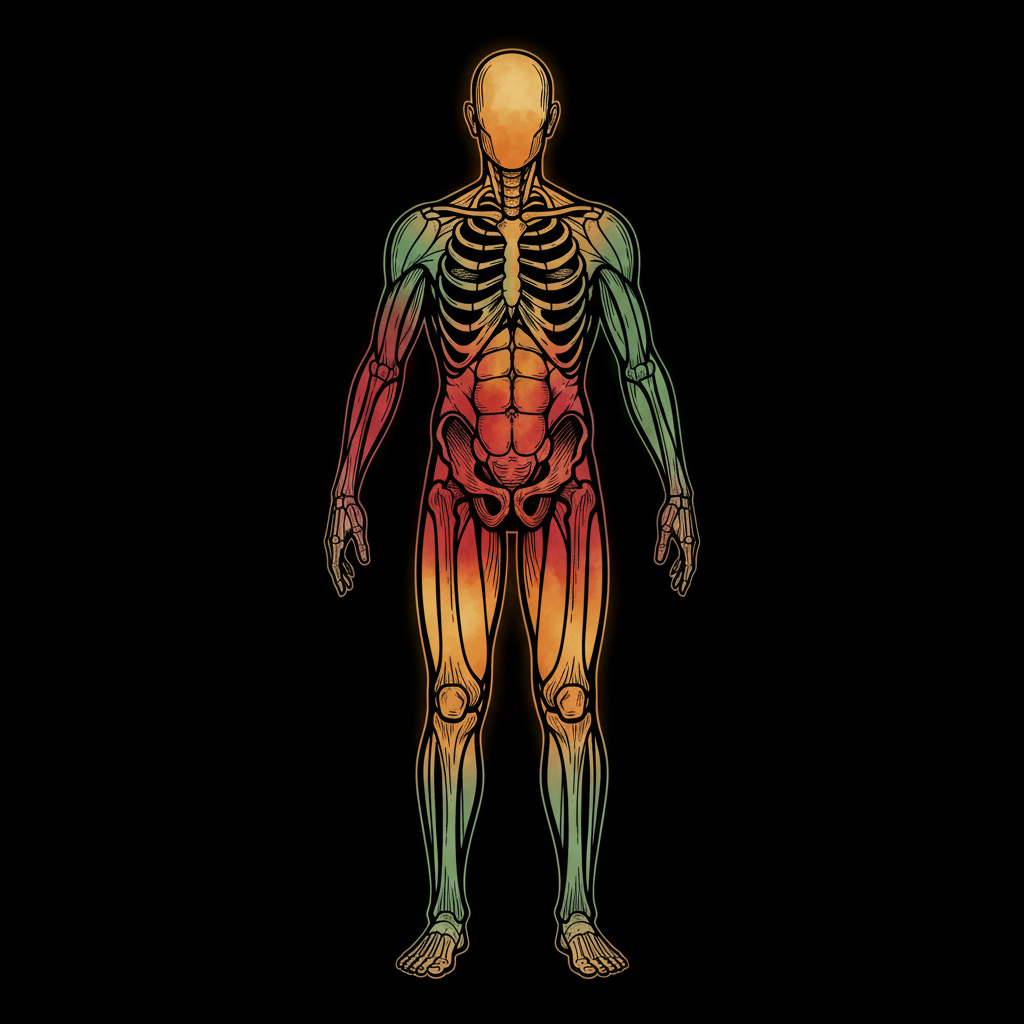
Front
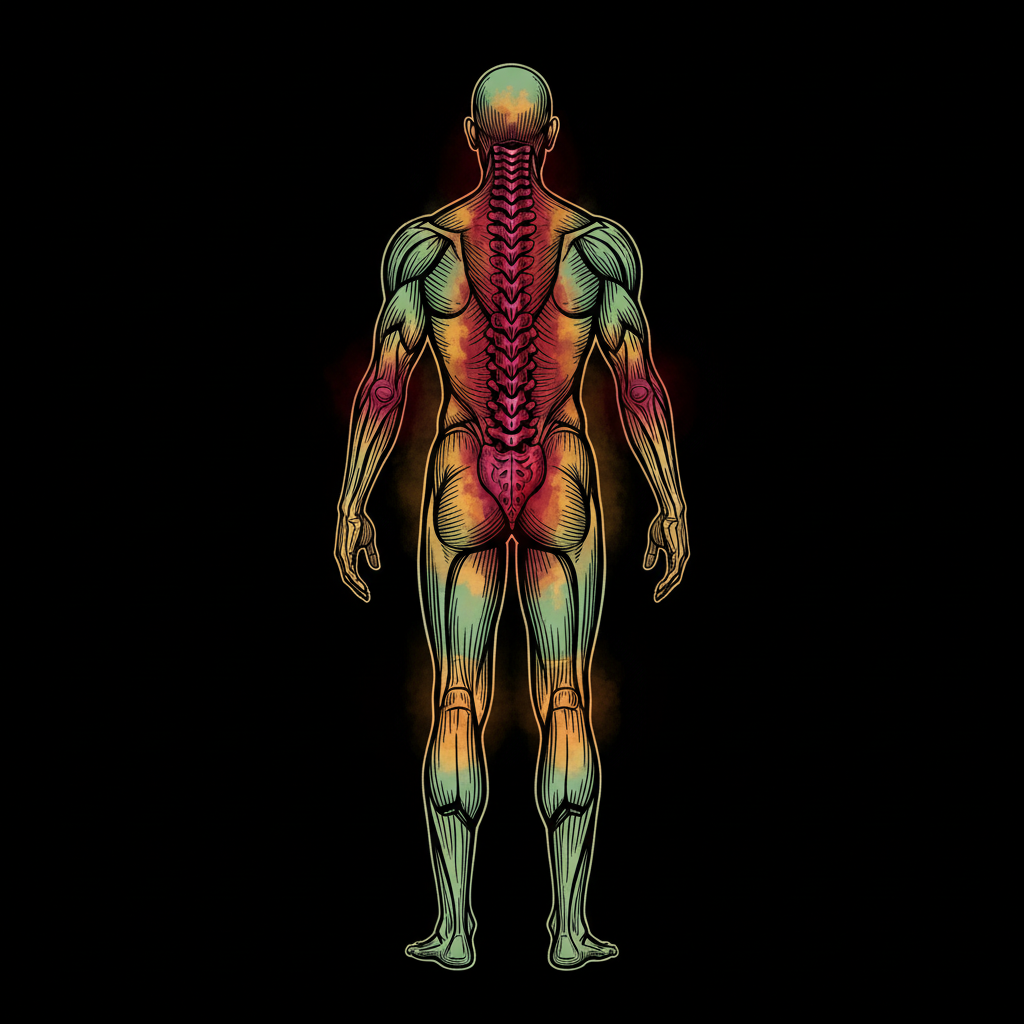
Back
Extreme pain (8-10)
This is where it hurts the most
Ribs
The skin over the ribs is extremely thin with bone right underneath. The needle literally vibrates against your ribs, and every breath makes it worse. For most people, the ribs are the single most painful place to get tattooed. If you're planning a large rib piece, expect a tough session.
Sternum
The sternum is a flat bone with minimal skin and fat coverage. The pain is sharp, deep, and constant. On top of that, the sternum moves with every breath, so there's no moment of relief. A popular spot - but only for those who know what they're getting into.
Spine
The entire length of the spine is rough. Vertebrae sit just below the skin and the needle vibration transfers directly into bone. The upper spine (back of the neck) tends to be more sensitive than the mid-section. The pain is dull, deep, and draining.
Elbow ditch
The soft inner part of the elbow - where they draw blood. Thin skin, loads of nerves, minimal muscle. The pain is sharp and burning. Good news - it's a small area, so it's over quickly.
Knees
Both the front of the knee (kneecap) and the back of the knee are brutal. The kneecap is pure bone under thin skin. The back of the knee is packed with nerves and tendons. Getting your whole knee tattooed takes serious commitment.
Groin and armpits
Both areas have thin, sensitive skin with a high concentration of nerve endings. Add the fact that these are naturally protected spots you don't usually touch - and your body reacts to the needle even more intensely.
High pain (6-7)
Painful but manageable
Neck
Both the front and back of the neck are sensitive - thin skin and proximity to the cervical spine. The side of the neck is slightly more bearable. What makes the neck unique is the vibration that travels into your head. Unpleasant, but quick - the neck is a small area.
Inner arm
The inner bicep and the area from armpit to elbow. The skin here is softer and thinner than the outer side. The pain is more of a burning sensation than a sharp sting. The outer arm is one of the least painful spots - the difference between inner and outer is huge.
Inner thigh
Same principle as the inner arm - softer skin, more nerves. The closer to the groin, the worse it gets. The outer thigh, meanwhile, is a breeze.
Shins
The front of the shin is the shinbone covered by a thin layer of skin. Bone vibration is unpleasant. The side and back of the lower leg (calf) is significantly milder.
Hands and fingers
Hands have a massive number of nerve endings - that's why they're so sensitive to touch. Finger tattoos, palms, and the back of the hand are all intense. Plus, hand skin is unique and tattoos here heal worse and fade faster.
Feet
The sole of the foot is one of the most sensitive spots on the body. Thousands of nerve endings. Foot tattoos are rare precisely because of how painful they are - and because tattoos here wear out quickly from walking.
Moderate pain (4-5)
You feel it, but you'll be fine
Chest
The chest (excluding sternum and ribs) has a decent layer of muscle, so the pain is bearable. For men, the chest tends to be easier. For women, the area around the breasts is more sensitive due to a higher concentration of nerve endings.
Stomach
Depends on body composition. More muscle or fat means less pain. The skin on the stomach is fairly thin, but there's no bone for the needle to vibrate against. Result: moderate pain, nothing terrible.
Lower back
The area above the buttocks - the lower back has thicker skin and more fat than the upper back. Pain ranges from mild to moderate. Near the spine, though, it intensifies.
Head
Head tattoos are specific - the skull is hard bone right under the skin, so vibrations are intense. But the scalp skin is fairly thick. The result is somewhere in between - uncomfortable vibration, but not unbearable pain.
Mild pain (1-3)
Start here if you're nervous
Outer arm and shoulder
The classic. The most popular spot for a first tattoo - and for good reason. Thick skin, plenty of muscle mass, minimal nerve endings. The deltoid (shoulder) and outer bicep/tricep are an ideal starting point. The pain feels more like a cat scratch - you feel it, but it's nothing dramatic.
Forearm
The outer forearm is comfortable. The inner side is slightly more sensitive (closer to veins), but still ranks among the least painful areas. That's why the forearm is such a popular choice.
Outer thigh
Large surface, strong muscles, thick skin. The outer thigh is ideal for bigger pieces - pain is minimal and the surface is flat, making it easy for the artist to work on.
Calf
The back of the calf is comfortable - plenty of muscle and relatively thick skin. Toward the Achilles tendon and ankle, the pain increases.
Upper back and shoulder blades
The area between the shoulder blades and shoulders. Strong muscles, thick skin. One of the least painful spots on the body. Directly on the shoulder blade (bone) it picks up a bit, but nothing dramatic.
What makes tattoo pain worse
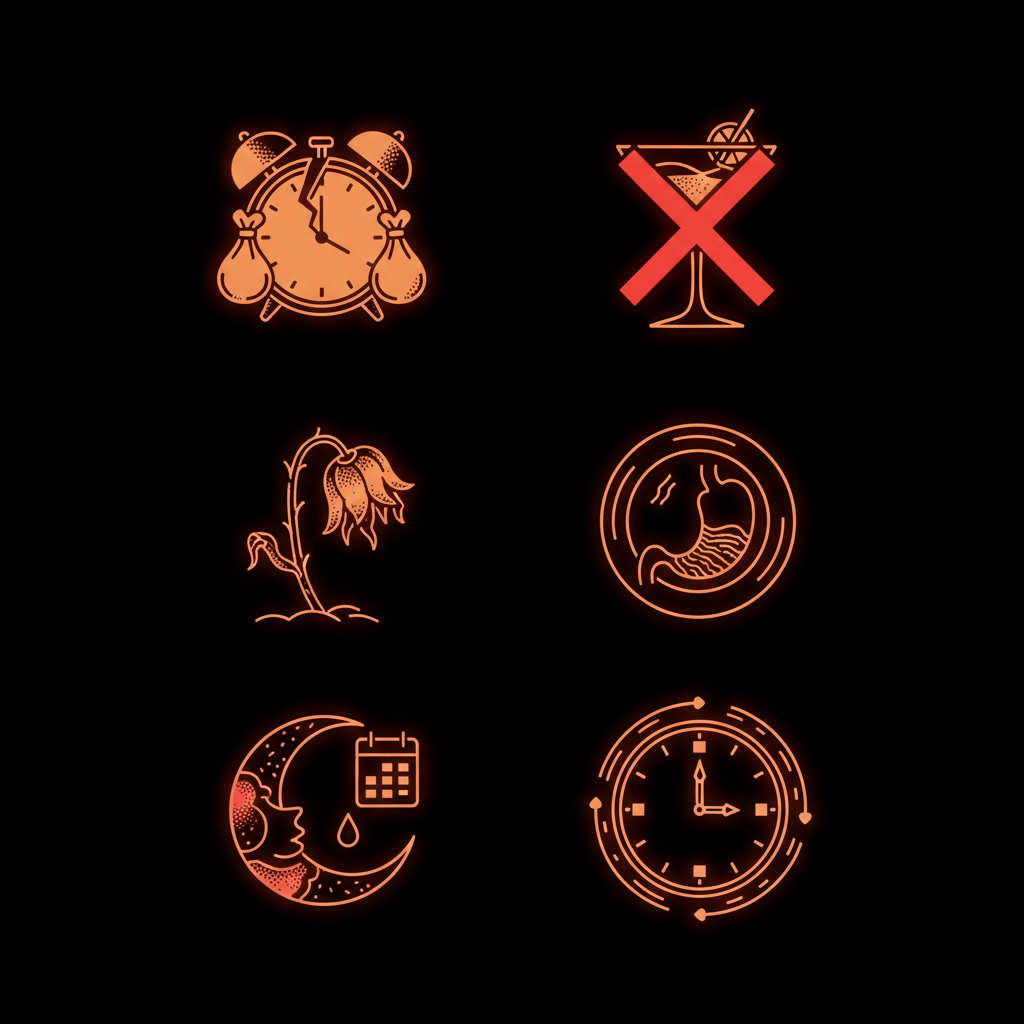
Two people can get the same tattoo in the same spot and one says "easy" while the other says "never again." Pain is subjective, but there are factors that measurably make it worse. Here are the biggest ones:
Sleep deprivation
A tired body has a measurably lower pain threshold. Your body hasn't had time to recover, your nervous system is hypersensitive, and everything hurts more. Get at least 7-8 hours of sleep before your tattoo. No "I'll catch up after the session" - that doesn't work.
Alcohol and hangovers
This is a classic mistake. Hangover means dehydration plus a wrecked nervous system plus thinner blood. Alcohol increases bleeding, so the artist has to wipe more often and ink doesn't hold as well. Result: longer session, more pain, worse healing. No alcohol for at least 24 hours before your tattoo. And definitely not on the day - no serious artist will tattoo you drunk.
Dehydration
Dehydrated skin is drier, less elastic, and more sensitive to the needle. Drink plenty of water the day before and on the morning of your tattoo. It's not about chugging water right before - it's about being consistently hydrated.
Hunger and low blood sugar
Never on an empty stomach. Blood sugar directly affects how you perceive pain. Low blood sugar can make you feel faint, shaky, and amplifies pain significantly. Eat a solid meal 1-2 hours before your session - something with protein and complex carbs, not candy.
Menstrual cycle
This doesn't get talked about enough, but it's a real factor. During the luteal phase (roughly a week before your period) and during menstruation, your pain threshold is measurably lower - hormones (estrogen, progesterone) directly affect how your nervous system processes pain signals. Your body also retains water, skin can be more sensitive, and overall comfort drops. If possible, schedule your tattoo for the first half of your cycle (follicular phase), when pain tolerance is naturally higher. It's not a rule - plenty of people handle it fine any time - but if you know you're sensitive to pain, it can help.
Session length
The first hour is usually the easiest - your body releases adrenaline and endorphins that dull the pain. After 2-3 hours, those reserves run out, your body gets tired, and pain intensifies. For all-day sessions (5-8 hours), regular breaks are key. Food, water, stretching, fresh air.
Tattoo style
Fine lines produce sharper, more concentrated pain - like a scratch. Shading and fill work is duller but the needle passes over the same area repeatedly. Dotwork can be surprisingly intense - individual dots create a constant sharp sensation. Whip shading tends to be gentler on sensitive areas than traditional shading.
How to handle the pain
Realistic expectations are the best preparation. Here are a few things that actually work:
- Breathe. Sounds basic, but controlled breathing (long inhale through the nose, slow exhale through the mouth) measurably reduces pain perception. Don't hold your breath.
- Talk to your artist. Every good artist expects breaks. If you need a pause, say so. No shame in that.
- Distract yourself. Music, a podcast, conversation - anything that diverts attention. The brain can't fully process pain when it's busy with something else.
- Skip the candy. Sweets cause a rapid blood sugar spike followed by a crash. Fruit, nuts, or a protein bar are better choices.
- Numbing cream. They exist (lidocaine-based), they work, and it's perfectly fine to use them. For some areas (ribs, sternum) they're almost a necessity. Always check with your artist beforehand.
Pain is part of getting tattooed - but it should never be the reason you don't get one. Everyone who has a tattoo went through that pain. And most people say it was better than they expected.
Planning a tattoo?
Book at HIDN Tattoo - Prague 7, Letna. We'll help with placement and preparation.
Book now